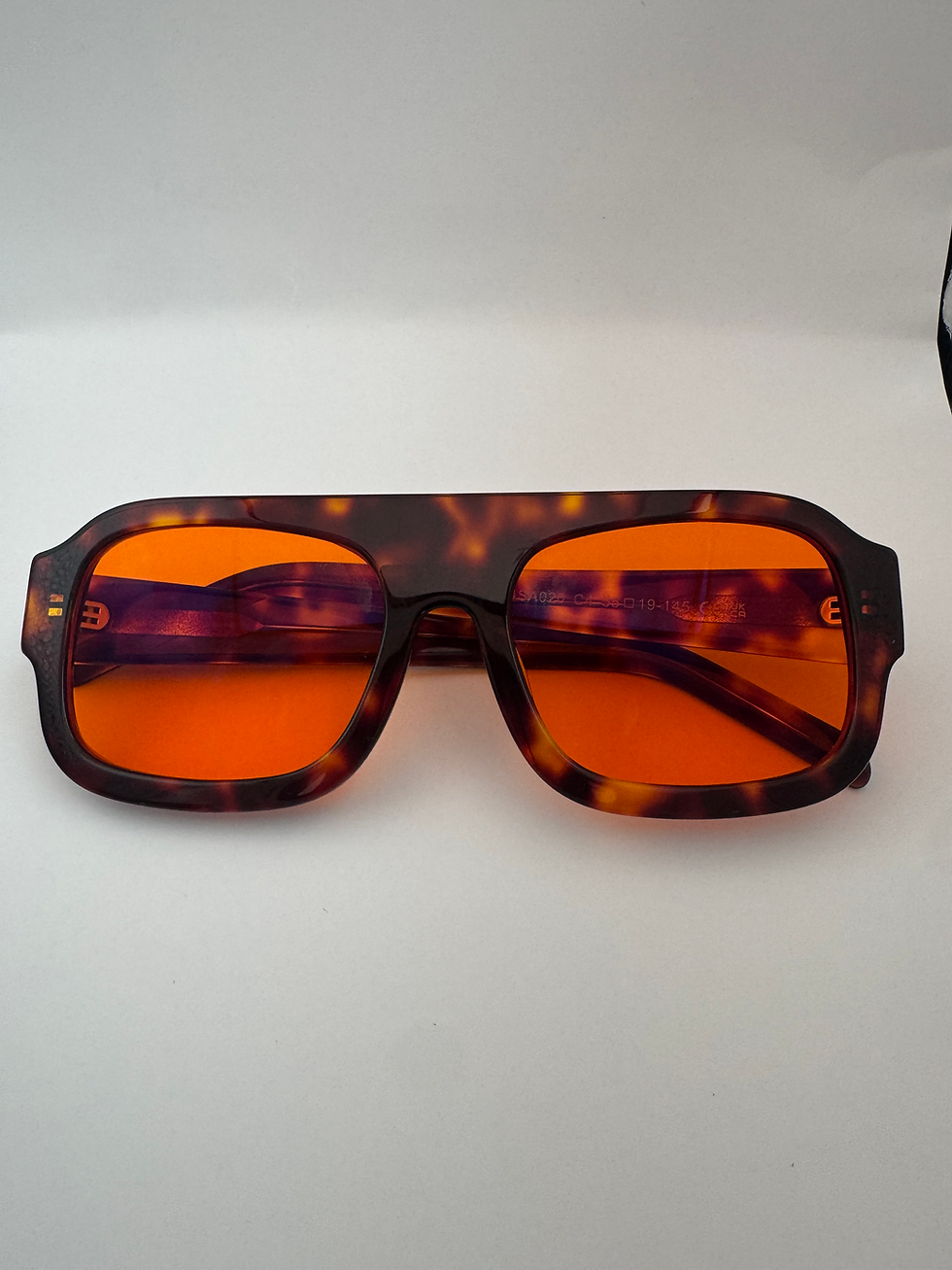
Blue Light Night Sync
- recoverbyinfo
- Feb 23
- 3 min read

98.5% of Blue-cut | 50% TV
How to Use Recoverby Blue Light Night Sync for Better Evening Performance
Introduction
Recovery Blue Light Night Sync “98.5% blue cut” indicates these red‑lens glasses reduce the power of light in the targeted blue‑light band by 98.5% compared with unfiltered light. This specification refers to percent attenuation across a designated wavelength range, not to a single wavelength value. Blue light is commonly defined as approximately 400-500 nm; circadian impact is strongest near ~460 nm. If a lens blocks 98.5% of that band, only 1.5% of the original blue‑band energy passes through (for example, if a light source emits 100 units at 460 nm, 1.5 units remain after the filter). These glasses also provide roughly 50% visible‑light transmittance for TV/indoor viewing, balancing effective short‑wavelength attenuation with usable low‑light visibility.
How they help
Red/amber lenses substantially reduce short‑wavelength light that suppresses evening melatonin in many people. Clinical studies show benefit for some individuals (for example, those with delayed sleep timing or specific light sensitivity), but systematic reviews report heterogeneous results and advise using these glasses alongside proven sleep behaviors (dim lights, consistent bedtime, screen limits).
When to wear (recommended timing)
Begin wearing the glasses about 1–3 hours before your regular bedtime when exposed to screens or bright indoor lighting.
If needed, start with 30–60 minutes and increase to ~2 hours as you acclimate.
Keep them on through your wind‑down routine (reading, low‑stimulus TV, finishing chores).
Remove the glasses when you go to bed; do not sleep with them on.
Reading and evening activities
Reading while wearing red lenses is acceptable for evening wind‑down. Expect color distortion and reduced contrast; if text becomes hard to read, use a warm (orange/red) bedside lamp rather than increasing brightness.
Avoid tasks requiring accurate color discrimination while wearing deep tints.
Daytime use and light sensitivity
Individuals with photophobia or migraine triggers may find red tints helpful indoors during the day.
These glasses are not a substitute for certified sunglasses outdoors unless the product explicitly states UV400 or equivalent UV protection.
Driving and safety
Avoid driving with deep red or heavy tints that alter color perception (traffic lights, signage, dashboard indicators). Only drive with lenses explicitly certified as driving‑safe.
Trial plan (how to test effectiveness)
Baseline week: keep a simple sleep diary (bedtime, sleep latency, awakenings, subjective quality).
Trial week: wear the glasses 60–120 minutes before bed nightly; keep other behaviors unchanged.
Compare outcomes; continue use only if consistent benefit is observed over several nights.
Practical tips
Expect a short adaptation period; color shifts and reduced contrast often become tolerable after a few nights.
Combine glasses with other sleep hygiene measures (consistent schedule, dim warm lighting, reduced screen time).
Choose optical‑grade lenses and request the spectral transmission curve if precise wavelength performance is important.
Clean and store per manufacturer instructions to avoid damage.
Not recommended (do not)
Do not expect these glasses to replace sunglasses outdoors unless UV protection is specified.
Do not drive with heavy red tints unless certified for driving.
Do not rely solely on them to treat chronic insomnia - seek professional care if problems persist.
Do not use routinely on children without professional advice; consult a pediatrician or pediatric ophthalmologist.
Do not sleep with the glasses on - remove them when you lie down to avoid discomfort and potential damage.
At Recovery, we are confident that Blue Light Night Sync can meaningfully improve evening wind‑down and sleep for many users, as reported by numerous customers. Use it as part of a consistent sleep routine and evaluate results with a short trial; if you experience persistent sleep difficulties or ocular symptoms, consult a healthcare professional. Explore our full sleep and wellness range for complementary products: