Blue‑Light Glasses vs. Screen Settings vs. Behavior - What Works Best?
- recoverbyinfo
- Jan 28
- 4 min read

Short answer: all three can help, but they work differently and aren’t interchangeable. For protecting sleep and circadian timing, behavior change (reducing evening screen exposure) gives the largest, most reliable benefit. Blue‑blocking glasses and screen spectral filters reduce the biologically potent short‑wavelength light and can meaningfully help when behavior change isn’t possible. Best practice: combine behavior + spectral control (glasses or filters) + bright daytime light.
How each approach works (mechanism, strengths, limits)
Behavior: reduce evening screen time or shift it earlier
Mechanism: less overall evening light and stimulation lets endogenous melatonin rise and reduces arousal; also reduces cognitive/emotional activation that delays sleep.
Strengths: largest impact when fully implemented — avoids both spectral and non‑light drivers of delayed sleep. Supported by controlled trials showing earlier sleep onset and better sleep when devices are avoided in the evening [1].
Limitations: often hard to sustain (work, social media, caregiving, shift work).
Blue‑light (short‑wavelength) blocking—glasses or lenses
Mechanism: lenses that block ~460 nm light reduce stimulation of melanopsin-containing retinal ganglion cells that suppress melatonin and shift circadian phase.
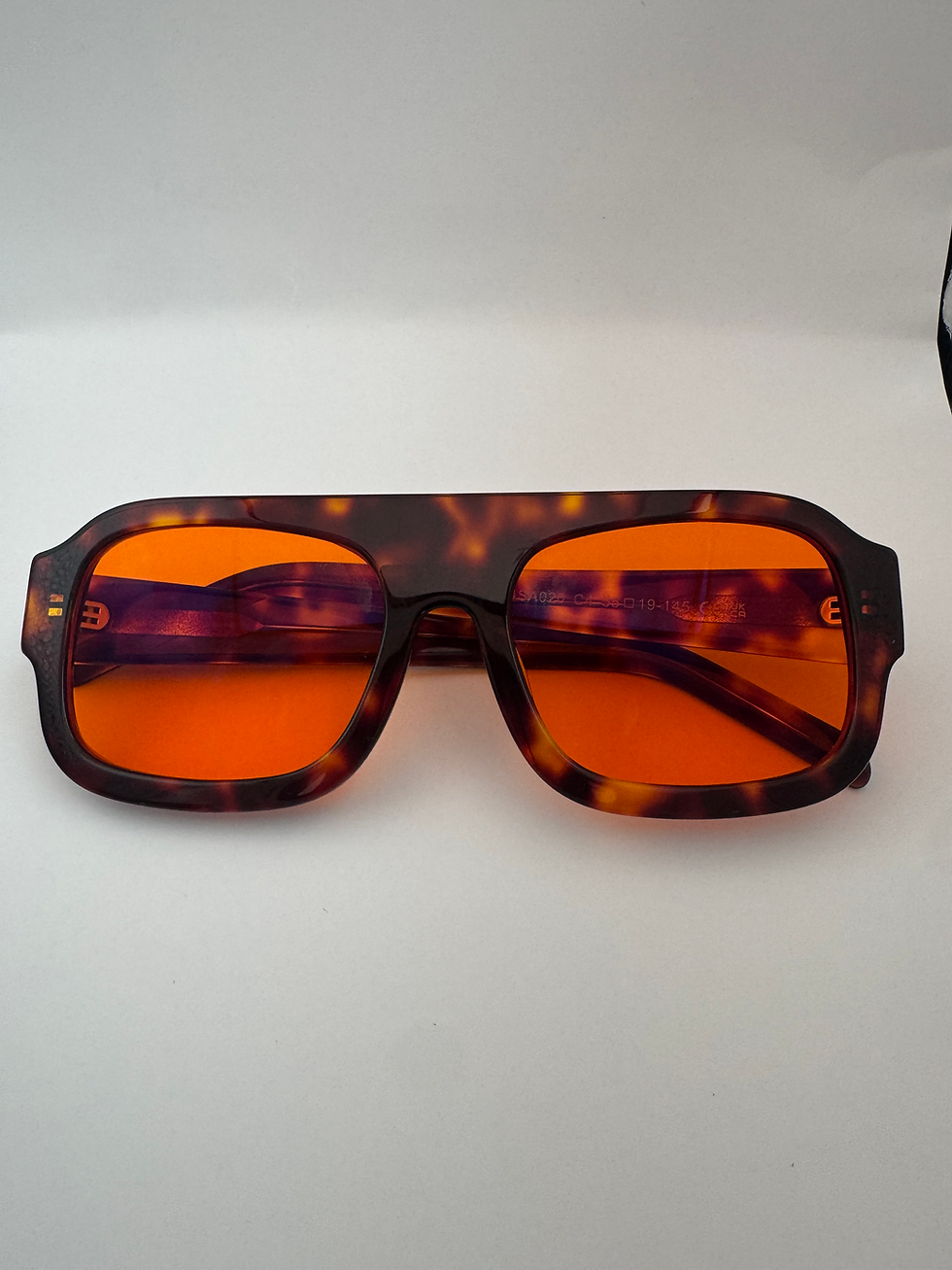
Evidence: randomized and crossover studies show that amber or orange lenses worn in the evening increase evening melatonin or accelerate its onset and improve sleep timing and subjective sleep in both adolescents and adults (examples below) [2,3]. Effects are strongest when lenses block a high proportion of short wavelengths; tint intensity trades off with color fidelity.
Strengths: practical when you must use screens or work late; portable and immediate.
Limitations: depends on spectral cutoff and fit. Clear “blue‑blocking” coatings with mild cutoff may have little circadian benefit compared with strongly tinted lenses. They won’t address non‑light issues (cognitive arousal).
Screen settings / software filters (night modes, blue‑light filters)
Mechanism: shift screen output toward longer wavelengths and often reduce luminance in the evening.
Evidence: reducing screen blue light via software lowers emitted short‑wavelength content and can lessen melatonin suppression vs unfiltered screens; however, behavioral trials show mixed results because screen brightness, viewing distance, and timing matter. A landmark trial found evening e‑reader use delayed sleep and reduced morning alertness vs reading a print book; spectral shift technologies are helpful but do not completely remove circadian impact if screens are bright or used late [1,4].
Strengths: automatic, convenient, retains color better than strong tints.
Limitations: many apps/devices keep peak short‑wavelength emission at levels that still affect circadian timing if used late; night modes differ widely by device and rarely match the suppression provided by high‑block lenses.
What the experimental evidence says (selected studies)
Evening use of light‑emitting e‑readers before bedtime delayed circadian timing, suppressed melatonin, and reduced next‑morning alertness compared with reading a print book - showing that evening screen behavior matters for sleep timing [1].
Adolescents who wore short‑wavelength‑blocking (orange) glasses in the evening had earlier melatonin onset, earlier sleep timing, and improved sleep duration compared with controls - demonstrating real-world benefits of high‑blocking lenses in a vulnerable group [2].
Evening use of amber lenses increased melatonin and improved subjective sleep in adults exposed to bright light at night; evidence supports spectral filtering’s biological effect [3].
Spectral sensitivity of the circadian system and showing how short wavelengths most strongly suppress melatonin - the basic physiology that makes glasses and filters useful [4,5].
Software filters and “night modes” reduce blue emission but their effectiveness depends on screen brightness, duration, and the percentage of short‑wavelength light removed; strong tinted lenses that block most short wavelengths produce larger melatonin‑protective effects than mild screen shifts when screens are used late [1–3,5].
Practical, evidence‑based recommendations
If you can: shift evening screen use earlier and cut screens 60–90 minutes before planned sleep. That’s the simplest, highest‑yield step [1].
If you must use screens in the evening: use strong short‑wavelength blocking (either amber/orange lenses that block most 430–500 nm light or maximum night‑mode + very low brightness). High‑blocking glasses have the strongest evidence for preserving melatonin timing when screens are used late [2,3].
Combine strategies: wear blue‑blocking glasses for late work, enable night mode on devices, and dim displays. Use bright light during daytime to strengthen circadian amplitude (helps resist evening light effects) [5].
Choose lenses intentionally: check spectral transmission (higher % block around 460 nm = more circadian protection). Clear tints with marginal blue reduction likely give small benefits only.
Be realistic about outcomes: glasses and filters reduce circadian light input but don’t eliminate the effects of cognitive/emotional arousal from late‑night browsing or work. For insomnia or persistent problems, behavioral programs (CBT‑I) remain primary.
Quick decision guide
Want maximal, evidence‑backed protection while still using screens: strong short‑wavelength‑blocking glasses + night mode + low brightness.
Want the most robust single change: stop screens 60–90 minutes before bed.
Want convenience with moderate benefit: enable night mode and reduce brightness — better than nothing, but less protective than high‑blocking lenses.
At Recoverby, we used the published science on short‑wavelength light and circadian biology to design glasses that block the blue wavelengths most implicated in evening melatonin suppression - built for people who work long hours at computers or spend extended time on phones.
Sources:
Chang AM, Aeschbach D, Duffy JF, Czeisler CA. Evening use of light‑emitting eReaders negatively affects sleep, circadian timing, and next‑morning alertness. Proc Natl Acad Sci U S A. 2015;112(4):1232–1237. Link.
Van der Lely S, Frey S, Garbazza C, et al. Short‑wavelength light‑blocking glasses in the evening improve sleep and behavioral difficulties in adolescents. Link.
Burkhart K, Phelps JR. Amber lenses to block blue light and improve sleep: a randomized trial. Chronobiology International. 2009;26(8):1602–1612.Link.
Figueiro MG, Wood B, Plitnick B, Rea MS. The impact of light from computer monitors on melatonin levels in college students. Neuro Endocrinology Letters. 2011;32(2):158–163. Link.
Brainard GC, Hanifin JP, Greeson JM, et al. Action spectrum for melatonin regulation in humans: evidence for a novel circadian photoreceptor. Journal of Neuroscience. 2001;21(16):6405–6412. Link.