Blue Light Glasses — What They Really Do (And Don’t Do)
- Recoverby

- Dec 28, 2025
- 3 min read
Updated: Mar 21
Understanding Blue Light
Visible light consists of a spectrum of wavelengths measured in nanometers (nm), with each color representing a specific wavelength range. This spectrum extends from approximately 400 nm (violet) to 700 nm (red) [1].
Blue light falls at the shorter wavelength end of this spectrum, specifically between 450–495 nm. While it is not ultraviolet light (which is below 400 nm), blue light carries a higher energy compared to other visible colors [2].
Sources of Blue Light
Blue Light comes from:
The Sun – the largest natural source.
Digital screens (phones, tablets, TVs, computers)
LED lighting also emit blue light [3].

Concerns Regarding Blue Light
Sleep and Circadian Rhythm:
Your body operates on a 24-hour internal clock known as the circadian rhythm. Specialized photoreceptors in the eyes detect light to regulate this clock, particularly a pigment called melanopsin, which is most sensitive to blue-green light around 480 nm. This wavelength sends strong "daytime" signals to the brain [4]. Excessive blue light exposure in the evening can: Suppress melatonin (“the sleep hormone”), Delay sleep onset, Shift your internal clock, making it harder to fall asleep [5].
Eye Strain and Discomfort
Many individuals experience tired, dry, or strained eyes after prolonged screen time. Research indicates that this discomfort often results from habits like reduced blinking and prolonged focus rather than blue light exposure itself [6].
Eye Damage Claims
There have been theories that high-energy visible (HEV) blue light could contribute to retinal injury or age-related macular degeneration. However, evidence supporting these claims is lacking, with some studies showing no significant benefits of blue-blocking lenses for eye health or macular protection [7].
Marketing of Glasses vs. Reality
Many companies promote glasses claiming to:
Block 100% of blue light Prevent eye damage Improve sleep and vision
However, these claims can be misleading. Often, inexpensive blue-blocking glasses only filter:
UV light up to 400 nm,
A limited portion of the blue spectrum (typically below 420 nm), which is mostly violet or near-UV, not the more crucial blue light affecting sleep around 480 nm [8].
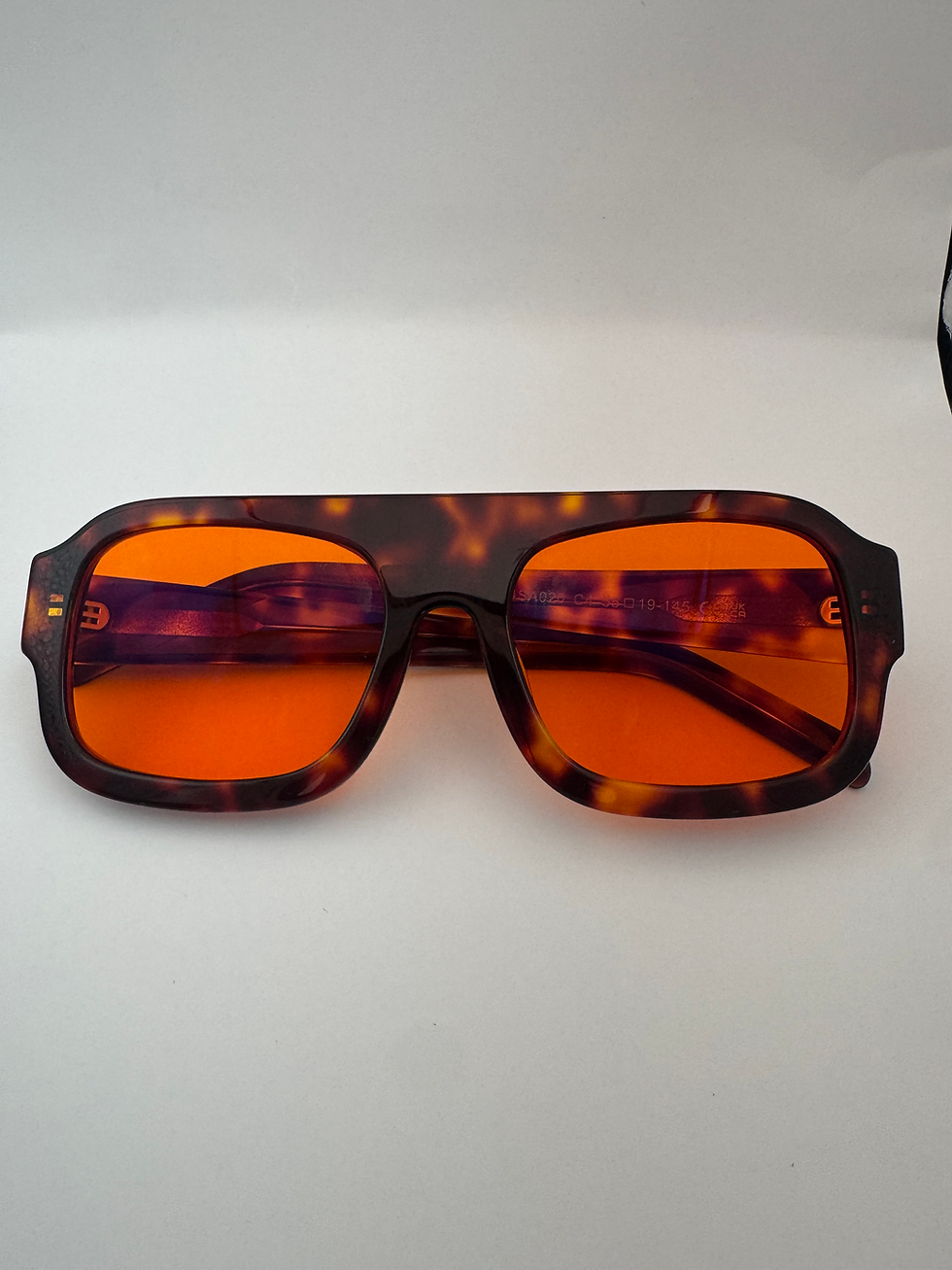
Why True 100% Blue-Blocking Lenses Appear Orange/Red
To eliminate all wavelengths of blue light (400–500 nm), lenses must absorb or filter these wavelengths significantly. When blue light is entirely removed, the remaining spectrum appears orange or red due to human color perception. Thus:
Blocking a minor blue spectrum results in slightly yellow lenses.
Blocking most wavelengths affecting circadian rhythm (450–495 nm) makes the lenses appear orange.
Blocking even more (up to 500+ nm) yields red lenses [9].
This principle means that “clear blue-blocking” glasses often do not filter out biologically relevant blue wavelengths effectively, only targeting the weaker edge of the spectrum.
Research Insights
While some question the effectiveness of blue-light glasses, specific studies indicate potential benefits in controlled environments, particularly concerning melatonin suppression and subjective sleep quality when used correctly.
Key Findings:
Blue-blocking glasses can reduce melatonin suppression during evening light exposure, especially when worn before bedtime in bright environments [10].
Some studies report improved subjective sleep quality with amber/blue-blocking lenses compared to less filtering options [11].
However, the effects may not be universal or impactful across all demographics, particularly in healthy adults without sleep issues [12].
Practical Takeaways
Evening Screen Exposure: It is well-documented that blue light exposure in the evening can disrupt sleep by suppressing melatonin production [13].
Effectiveness of Blue-Light Blockers: Lenses that filter wavelengths around 450–495 nm (often appearing orange/red) are more likely to influence biological signals related to sleep.
Light Management: Reducing overall brightness and light exposure is often more effective than relying on special lenses. Strategies include dimming screens, utilizing “night mode,” and limiting screen time before bed [14].
Skepticism About Claims: Many “clear” blue blockers may not adequately filter the wavelengths affecting circadian rhythms. Claims to block 100% of blue light can often be misleading [15].
Lack of Solid Evidence for Eye Damage Prevention: Current research does not robustly support claims that blue-blocking lenses protect against macular degeneration or other eye diseases [16].
Final Thoughts
Blue light is not inherently “bad.” During the day, it helps keep you alert and supports your natural circadian rhythm. However, excessive blue light exposure at night, particularly from screens, can hinder sleep quality.
At Recoverby, we've leveraged current research to create products focused on managing blue light exposure effectively. Our evening glasses are specifically designed to reduce blue light before bedtime, minimizing overstimulation as your bodyprepares for rest. For daytime use, we offer glasses tailored for individuals who spend extended periods on screens, helping to manage blue light exposure from digital devices while promoting visual comfort and alleviating dryness during long work hours.
Our approach is straightforward: not all blue light is harmful, and not every situation requires complete blocking - just intelligent, science-based management.
Discover Recoverby Products:
Article sources: